SOLDEM – Solar Decarbonization of Metal Melting Processes (2026 – 2030)
Solar-hybrid metal recycling • Solar Furnace
Linkedin
SOLDEM is Horizon Europe funding project pioneering the world first solar-hybrid process for recycling brass and stainless-steel scraps, replacing fossil fuels with concentrated solar heat, renewable electricity and green hydrogen.
Read more
By validating innovative hybrid reactors and digital tools, the project aims to cut CO₂ emissions by up to 93% while enabling cost-competitive and circular metal production in Europe. Bringing together 10 participants from 6 countries, SOLDEM supports industrial resilience through local scrap-to-product value chains.
CSP-Boost contribution:
• Development of the solar concentrating system and hybrid solar reactors
• Leadership of dissemination, exploitation and communication activities to maximise project impact and accelerate industrial uptake.
This project has received funding from the European Union’s Horizon Europe research and innovation programme under the grant agreement No 101294209.
Views and opinions expressed are however those of the author(s) only and do not necessarily reflect those of the European Union or the European Health and Digital Executive Agency (HaDEA). Neither the European Union nor the granting authority can be held responsible for them.
Proposal Development and Writing
European innovation funding
2025
CSP-Boost supported the preparation of a Horizon Europe proposal for call HORIZON-CL4-INDUSTRY-2025-01-TWIN-TRANSITION-33 focused on solar and high-temperature recycling systems in close collaboration with the coordinator and consortium partners.
Read more
The work combined technical expertise in concentrated solar power, coherence of the technical narrative and expected impacts as well as definition and development of the dissemination, exploitation and stakeholder engagement strategy.
Service provided:
• Proposal development
• Impact, Dissemination & Exploitation strategy
• Optical expertise in CSP
• System design support
Industrial Nitrogen Heating with Parabolic Troughs
Industrial heat • Parabolic trough solar collectors
Developed for Alto Solution (France) – 2024
CSP-Boost supported Alto Solution in the validation and optimization of a parabolic trough solar collector field designed for industrial nitrogen heating applications.
Read more
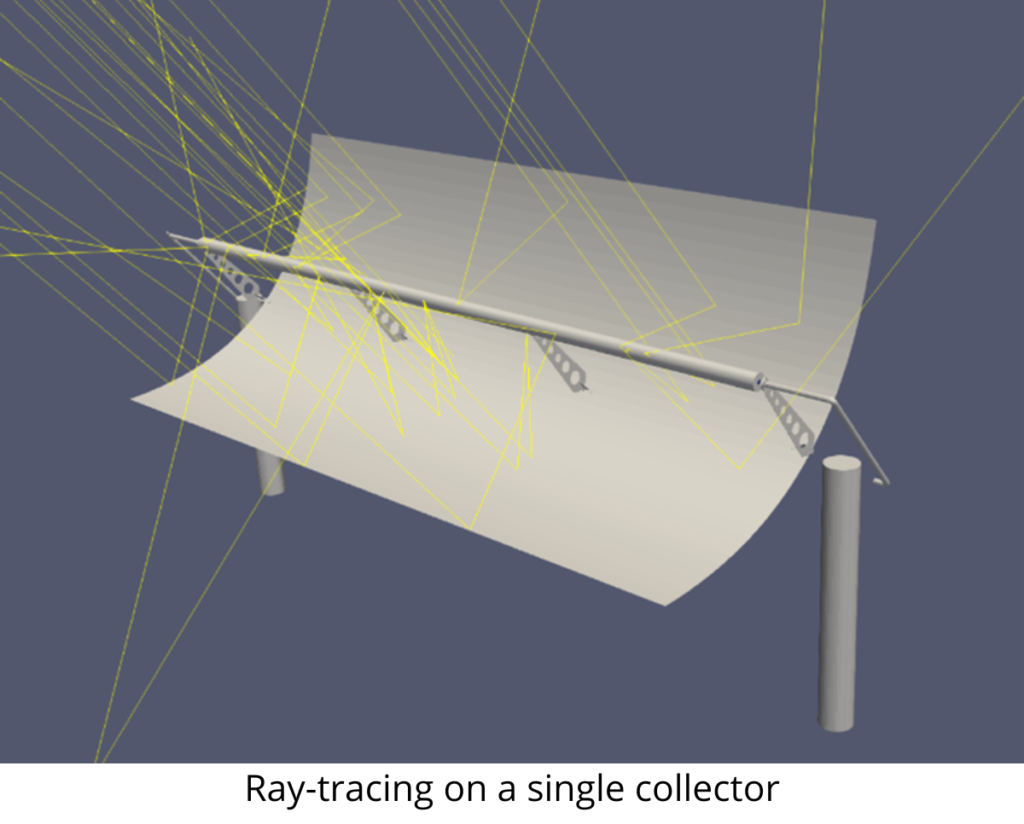
The study aimed to determine the optimal solar field configuration in terms of series and parallel loops while minimizing pressure losses and defining suitable outlet temperatures and operating pressures for the system. CSP-Boost developed an optical model to predict solar flux density on the absorber and coupled it with a thermal model to calculate fluid and wall temperatures along the loops under different operating conditions.
The study enabled the evaluation of solar field configurations and operating parameters required to ensure efficient industrial heating performance while maintaining acceptable pressure drops and thermal conditions.
Service provided: Optical modelling • Thermal simulations • Solar field optimization • Operating condition assessment
Seed Roasting with Concentrated Solar Energy
Solar cooking • Lytefire PRO solar oven
Developed for Aurinko (France) – 2025
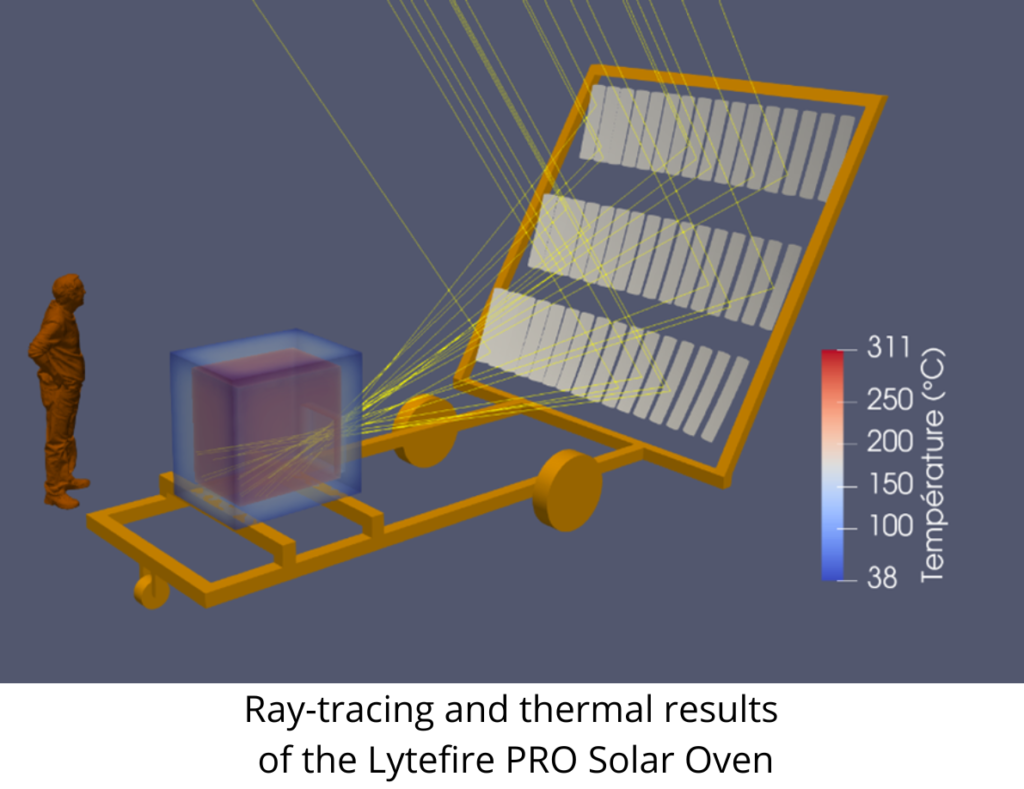
Aurinko commissioned CSP-Boost to evaluate the performance of a Lytefire PRO Solar Oven used for roasting seeds with concentrated solar energy. The client markets solar-roasted seeds across the Cerdagne region and regularly presents the solar oven during local market events to demonstrate the sustainability and efficiency of the process.
Read more
To support these outreach activities, CSP-Boost developed a detailed optical model of the Lytefire PRO solar oven and coupled it with a thermal model to predict operating temperatures, heating dynamics and thermal inertia. This simulation framework provided a clear understanding of how the solar oven captures and stores heat, making it easier to explain the roasting process and the underlying solar technology to customers and the general public.
CSP-Boost developed an optical and thermal simulation model of the Lytefire PRO solar oven used for solar-powered seed roasting. The study evaluated operating temperatures and thermal inertia to support public demonstrations and communication activities.
Service provided: Optical modelling • Thermal simulations • Performance assessment • Science communication support
Beam-Down Solar Furnace for Material Sintering
High-temperature solar processes • Beam-down concentrator
Developed for DALE (France) – 2025 – 2026
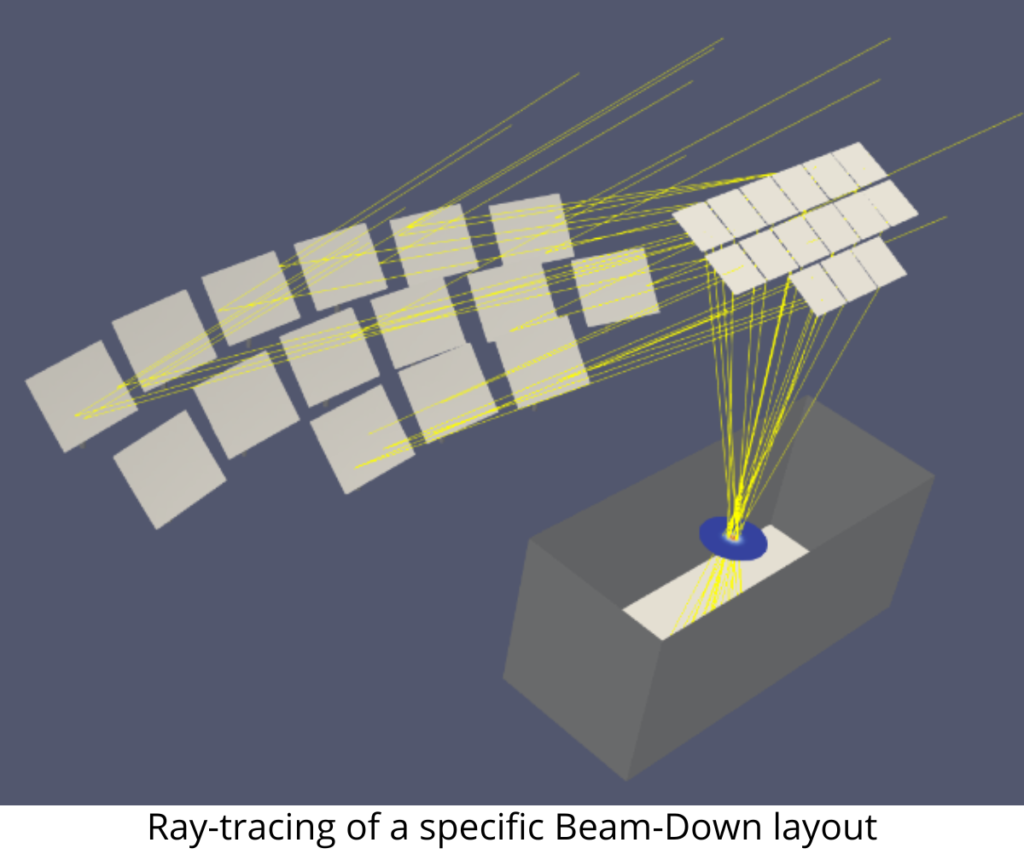
CSP-Boost carried out the complete optical design of a beam-down solar furnace intended for high-temperature solar sintering applications.
Read more
The project aimed to develop a compact and manufacturable concentrating system capable of achieving temperatures around 1,500 °C while maintaining homogeneous solar flux distribution at the focal point. CSP-Boost developed a flexible optical model capable of analysing multiple heliostat dimensions and secondary reflector configurations. Several architectures were evaluated in terms of optical efficiency, compactness and manufacturing feasibility.
The selected beam-down configuration achieved the required balance between optical performance, flux homogeneity and practical implementation constraints, providing a robust basis for future solar sintering applications.
Service provided: Optical modelling • Thermal simulations • Solar field optimisation • Operating condition assessment
Powder2Power (2023 – 2027)
Electric & Heat Production • Fluidised Particle-Driven Concentrated Solar Power
Project website
Powder2Power (P2P) is a Horizon Europe project pioneering a new generation of high-temperature concentrated solar power (CSP) technology based on fluidized particles as both the solar receiver and heat transfer medium. By demonstrating a complete 2 MWth particle-driven CSP system at the Themis solar tower research infrastructure in France, the project aims to validate operating temperatures up to 750 °C, enabling highly efficient supercritical CO₂ power cycles and advanced thermal energy storage.
Read more
Compared with conventional molten-salt systems, Powder2Power is expected to increase sun-to-power efficiency by 5–9% and reduce the Levelized Cost of Electricity (LCOE) by 5.4%, while also opening new opportunities for industrial process heat applications. Bringing together leading research organisations and specialised industrial partners, the project supports the development of more efficient, flexible and sustainable solar thermal technologies aligned with Europe’s climate neutrality objectives.
CSP-Boost contribution:
• Scale-up of key system components, including the solar field, particle receiver and heat exchanger
• Participation to the experimental campaign
• Leadership of dissemination, exploitation and communication activities to maximise project visibility and industrial impact.
Beam-Down Solar Concentrator for Recycling Applications
Solar recycling • Beam-down concentrator
Developed for PROMES-CNRS (France) – 2023
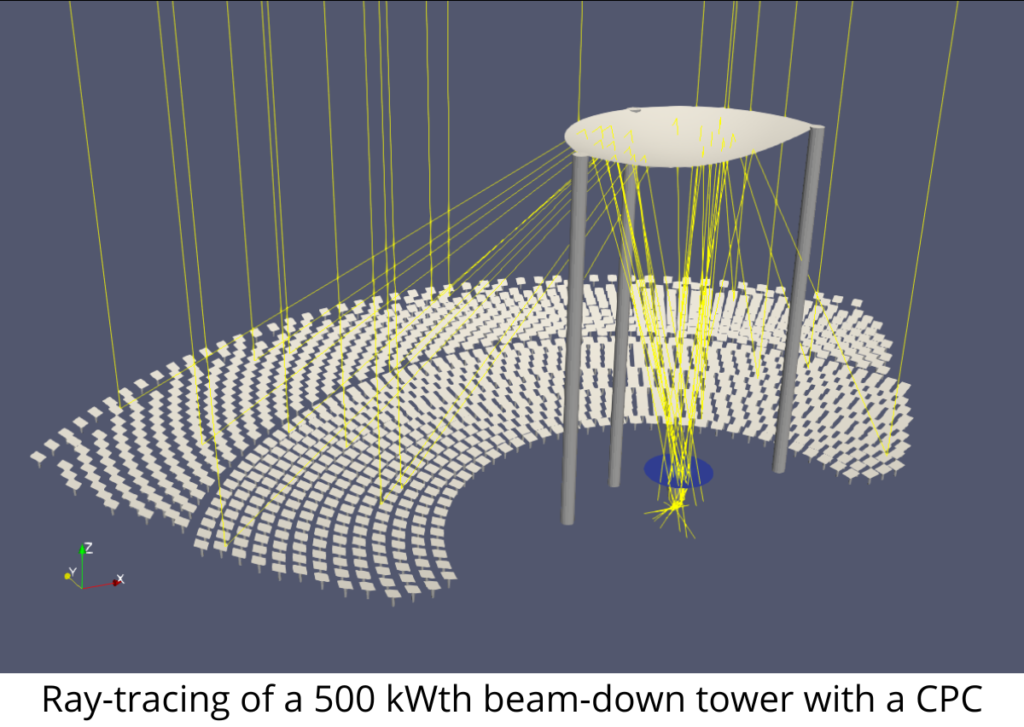
CSP-Boost supported CNRS-PROMES in the optical design and assessment of a beam-down solar concentrating system dedicated to recycling of organic and inorganic materials.
Read more
The study aimed to design a system capable of delivering approximately 500 kW and 2 MW/m² at the aperture while maintaining optical efficiency above 20%.
CSP-Boost developed a workflow starting with a brainstorming phase to define system geometry, guided by a CNRS boundary conditions document. Using open-source ray-tracing, the beam-down system was sized to meet the technical requirements. Final outputs include a detailed technical specification and a 10°-step optical performance matrix.
Service provided: Ray-tracing simulations • Optical design • Performance matrix generation • Flux distribution analysis
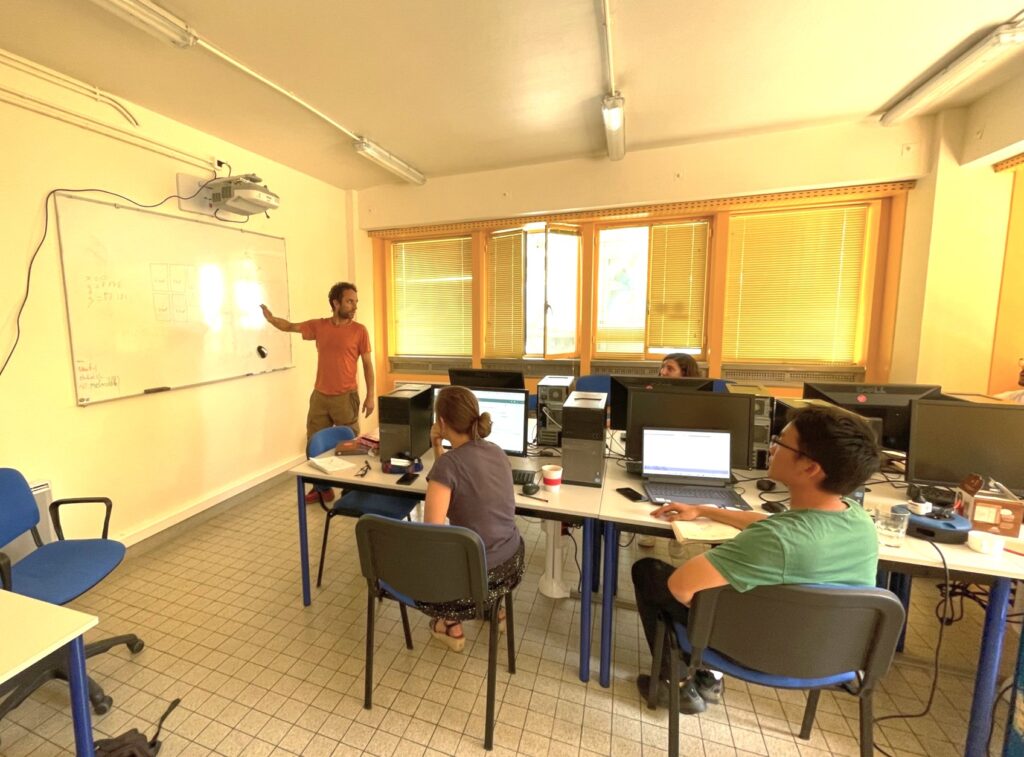
Solstice Optical Simulation Training
Monte Carlo ray-tracing • Technical training
Developed for PROMES-CNRS (France) – 2022
CSP-Boost supported CNRS-PROMES in the optical design and assessment of a beam-down solar concentrating system dedicated to recycling of organic and inorganic materials.
Read more
CSP-Boost delivered a specialized technical training module covering Monte-Carlo ray-tracing principles and the setup of Solstice with Visual Studio for Matlab automation. The curriculum included YAML scripting for geometry and surface property definition, solar field pivot tracking methods, and data visualization using ParaView and Matlab.
This culminated in a practical application simulating the Themis heliostat field, focusing on flux distribution and targeting strategies.
Service provided: Technical training • Optical simulation workflows • YAML scripting • Data visualisation and analysis